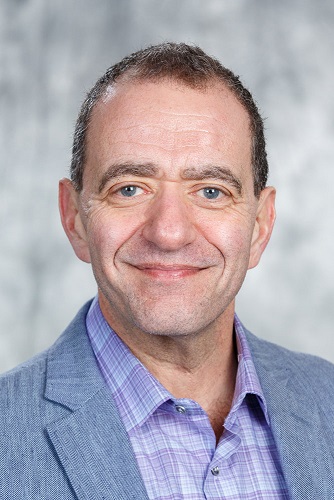
Brian Cutler
PhD
Professor
Faculty of Social Science and HumanitiesDr. Cutler is one of the world's foremost forensic psychology experts, advancing research in areas of wrongful conviction and eyewitness identification.
brian.cutler@ontariotechu.ca
905.721.8668 ext. 3807
Areas of expertise
- PhD - Social Psychology University of Wisconsin-Madison, USA 1987
- MA - Psychology State University of New York at Genesco, USA 1984
- BA - Psychology University of Rochester, USA 1982
The Truth as Eye Recall
Toronto, Ontario December 6, 2013Continuing Legal Education Workshop, Association in Defence of the Wrongly Convicted
The Identification Expert: Who is that Masked Man?
Toronto, Ontario November 1, 2013Criminal Lawyers Association Conference
Associate Dean
Faculty of Social Science and Humanities, UOIT July 1, 2010In this role, Dr. Cutler assists the Dean on all matters pertaining to faculty leadership and administration, and serves as Acting Dean in the dean's absence.
Professor
Faculty of Social Science and Humanities, UOIT July 1, 2008Dr. Cutler supervises innovative undergraduate and graduate research in areas of false accusations and mistaken eyewitness identification.
Author
Reform of Eyewitness Identification Procedures October 22, 2013A follow-up to his previous book Conviction of the Innocent, in this book Dr. Cutler narrows his focus to the single most common feature in cases of wrongful convictions: mistaken eyewitness identifications. Published in 2013 by the APA Press, this book is an important milestone in ongoing efforts to improve the manner in which police conduct photoarrays and lineups and improve the accuracy of eyewitness identifications.
Co-Author
Jury Selection November 2, 2012Jury Selection reviews the laws and practices governing the jury selection procedure in the U.S. as well as the scientific research on jury selection. The book provides an overview of standardized tools for assessing personality traits and attitudes that may be related to jurors' verdicts as well as the research establishing the validity of these measures. Published in 2012 by Oxford University Press, the book is part of a 19-volume Oxford Forensic Best Practices Series.
Guest Editor and Editorial Board Member
Law and Human Behavior January 1, 2012Since 1990, Dr. Cutler has served on the Editorial Board of the world’s leading forensic psychology journal, Law and Human Behavior, journal of the American Psychology-Law Society in various roles, including guest editor since 2012. Previously, he served as editor from 2006 to 2011, during which time he raised the journal’s international profile; and now serves as guest editor.
Editor
Conviction of the Innocent: Lessons From Psychological Research August 15, 2011In this 2011 book published by the APA Press, Dr. Cutler presents a state-of-the-field review of current psychological research on conviction of the innocent. This comprehensive volume represents an important milestone for research on miscarriages of justice and derives compelling recommendations for future research and practical reform in police and legal procedures.
Co-Author
Evaluating Eyewitness Identification January 25, 2010Evaluating Eyewitness Identification presents current information on factors that are known from scientific research to influence the accuracy of eyewitness identification. The book serves as a resource for attorneys who try cases involving eyewitness identification, psychologists who consult or testify in eyewitness cases, and eyewitness researchers. Published in 2010 by Oxford University Press, the book is part of a 19-volume Oxford Forensic Best Practices Series.
Member, Executive Committee
American Psychology-Law Society (AP-LS) August 1, 2006The AP-LS strives to enhance well-being, justice, and human rights through the science and practice of psychology in legal contexts. Since 2005, Dr. Cutler has served as a member of the society’s Executive Committee. His roles have included editor-in-chief of the society’s journal, president-elect, president, immediate past president, chair of the Governance Committee, and representative to the American Psychological Association’s Council.
American Psychology-Law Society
American Psychological Association
Association for Psychological Science
- Introductory Psychology (PSYC 1000U)
This course introduces students to the study of human thought and behaviour. Through a survey of major theories, principles, and research findings across a variety of fields within psychology, students will gain a better understanding of why people think and behave as they do. Typical topics include: the history of psychology, research methods, sensation and perception, learning, memory, emotion and motivation, consciousness, stress and health, social influences, developmental factors, psychological disorders and treatment. - Social Psychology (PSYC 2020U)
This course will introduce the scientific study of social behaviour and the social influences on human behaviour. Theories and research on such topics as attitude change and persuasion, stereotypes and prejudice, conformity and obedience to authority, altruism, attraction and close relationships may be introduced. Emphasis will be placed on experimental research, conducted both in the laboratory and in the field. - Research Methods (SSCI 2900U)
This course is designed as an introduction to research methods in the social sciences. Students will develop practical experience in a variety of research methods and techniques. Quantitative and qualitative research methods will be examined. Students may choose a research question from an area of personal or professional interest to pursue in the course. - Forensic Psychology (FSCI 3210U)
An overview of the various ways in which core areas of psychology (biological, clinic, cognitive, developmental, and social psychology) are applied to legal issues in both research and practice. The course focuses primarily on the application of psychology to criminal law. Students learn about scientific methods used to study forensic psychology topics (behavioural research methods) and learn about contemporary forensic psychology research. They gain an appreciation for the practice of forensic psychology, including the nature of the activity (e.g. psychological assessment and treatment in forensic settings, police psychology, and expert psychological testimony) and the practical and ethical constraints under which forensic psychologists practice. Although the specific topics covered may vary from term to term, sample forensic psychology topics covered in the course include forensic psychological assessment and treatment, eyewitness memory, interrogations and confessions, lie detection, police psychology, jury decision-making, psychopathy, investigative psychology, procedural justice, racial stereotyping, and wrongful conviction.