Summer Digital Transformation and ESL Study Groups and Introduction to Digital Transformation
Overview
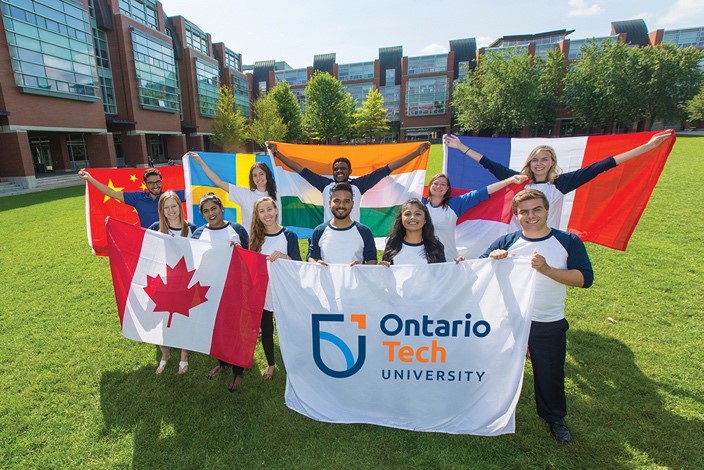 This short-term summer program introduces students to the technologies, trends, and career pathways shaping digital transformation across industries. Designed for visiting students in technical and technology-adjacent programs, the program combines instructor-led learning, online activities, applied exercises, and group discussion. Students explore how organizations are using emerging technologies to solve business and societal challenges, while building awareness of the skills needed for future study and employment.
Topics may include artificial intelligence and machine learning, game development, web and mobile technologies, cybersecurity, clean and renewable energy technology, ethics in IT, and career pathways in North America. ESL instruction can be added upon request.
Please contact us for pricing and further information.
Program highlights
- Flexible short-term programming designed for visiting student cohorts
- Customizable learning modules based on partner interests, student level, and program length
- Topics may include digital transformation, artificial intelligence, cybersecurity, robotics, engineering, clean and renewable energy technology, game development, web and mobile technologies, and ethics in IT
- Instructor-led learning combined with applied activities, online modules, group discussion, and hands-on exercises
- Opportunities to explore how emerging technologies are being used in business, society, and the future workforce
- Career-focused sessions connecting digital skills to future academic and employment pathways
- Programming can be adapted for technical, engineering, IT, business, or interdisciplinary student groups
- Delivery can be customized as a one-week intensive, multi-week summer program, or add-on experience for international cohorts
Ontario Tech University Facts
- Opened in 2003 - Less than one hour outside of Toronto, Ontario, Canada
- 14,000 graduate and undergraduate students and 33,500+ alumni
- 2 Locations: North Oshawa Campus & Downtown Oshawa Campus
- 6 Faculties; 2,000+ faculty and staff
- Degrees: 75 Bachelor's, 40 Master's and PhDs, and 30 College-to-university transfer programs
- 11 Canada Research Chairs
- 1,400+ international students representing 65 countries
Maclean's Magazine (Canada) and international rankings
- #2 in Canada and #144 in the world among young universities (Times Higher Education Young University Rankings)
- #1 library in Canada among undergraduate universities (Maclean's Magazine)
- #1 undergraduate university in Canada for reputation (Maclean's Magazine)
- Top 10 among undergraduate universities for student services (Maclean's Magazine)
- #3 in Ontario and #7 in Canada for Engineering (U.S. News Best Global Universities)
- #2 in Canada and Top 100 worldwide for Energy Science and Engineering (Shanghai Ranking)
- #2 in Canada for growth in international research collaboration (Research Infosource)
Ontario Tech University English language programs for Teachers, Professors and Support Staff
Courses
- Teaching English: SLA theory and instruction
- Advanced Proficiency for English Speakers
- English for Academic Purposes for Secondary Educators
- English for Academic Purposes for University Instructors
- English for Academic and Career Advising
- Profession-Specific ESL
- AI-Enhanced English Language Teaching
- Customized Course specifically for your Cohort
Target Audience
- Elementary school teachers
- Secondary school teachers
- University instructors
- Support staff
Course Descriptions and Learning Outcomes
-
Second Language Acquisition (SLA) Theory and Instruction
This course provides educators and student support professionals with a practical understanding of second language acquisition (SLA) theories and their application to English language teaching. Participants will examine evidence-based approaches that foster authentic communication and meaningful language use while developing instructional strategies that support learners' linguistic, social, and academic success. Emphasis is placed on translating SLA research into effective classroom and advising practices for diverse English language learners.
By the end of this course, participants will be able to:
- Explain major theories of second language acquisition and their implications for teaching and learning.
- Design instruction that incorporates evidence-based strategies to support English language learners with diverse linguistic and cultural backgrounds.
- Apply principles of differentiated instruction to meet learners' varying language proficiency levels and academic needs.
- Evaluate instructional materials and assessment practices for their effectiveness in promoting English language development.
- Reflect on their own teaching practices and identify strategies to foster inclusive, culturally responsive learning environments.
-
Advanced Proficiency for English Speakers
This advanced course is designed for educators and support professionals who already possess a high level of English proficiency and wish to refine their language skills toward near-native fluency. Participants will strengthen advanced oral and written communication, expand their command of nuanced vocabulary and idiomatic expressions, and develop greater precision in pronunciation, style, and professional discourse. The course emphasizes authentic, context-rich communication in academic and workplace settings.
By the end of this course, participants will be able to:- Demonstrate advanced proficiency in spoken and written English for professional and academic contexts.
- Analyze and apply conventions of grammar, vocabulary, style, and register appropriate to diverse audiences.
- Communicate complex ideas with clarity, precision, and confidence in oral and written formats.
- Evaluate their own language use and implement strategies for continued language development.
- Model effective communication practices that support collaboration in educational settings.
-
Teaching English for Academic Purposes (for Secondary Educators)
 This course equips secondary school educators with the knowledge and instructional strategies needed to prepare students for the linguistic and academic demands of post-secondary education. Participants will learn how to integrate English for Academic Purposes (EAP) principles into subject-area teaching, helping students develop the discipline-specific vocabulary, academic literacy, critical thinking, and communication skills required for success in college and university programs. Emphasis is placed on authentic academic tasks, scaffolding, and supporting diverse learners across the curriculum.
By the end of this course, participants will be able to:- Identify the academic language demands of secondary school curricula across subject areas.
- Design lessons that explicitly teach the language, literacy, and communication skills required for academic success.
- Implement instructional strategies that support multilingual learners in developing academic reading, writing, listening, and speaking skills.
- Develop assessments that measure both content knowledge and academic language proficiency.
- Foster classroom environments that promote equitable participation and academic achievement for English language learners.
-
English for Academic Purposes (for University Instructors)
This course prepares post-secondary educators to embed English for Academic Purposes (EAP) strategies within their disciplinary teaching to better support multilingual and international students. Participants will learn how to foster academic literacy, discipline-specific communication, critical thinking, and effective study practices that promote student success. The course emphasizes practical approaches for integrating language development into authentic academic tasks without compromising subject-specific learning outcomes.
By the end of this course, participants will be able to:
- Analyze the linguistic and academic expectations of university-level teaching and learning.
- Integrate discipline-specific language instruction into course design and classroom practice.
- Develop inclusive teaching strategies that support non-native speaking students in academic communication, critical thinking, and scholarly writing.
- Design assessments and feedback practices that promote academic language development while maintaining disciplinary standards.
- Evaluate instructional approaches that enhance non-native speaking student engagement, persistence, and academic success.
-
English for Academic and Career Advising
This course is designed for academic advisors, career services professionals, and other student support staff who wish to strengthen their English-language communication in advising contexts. Participants will expand their professional vocabulary and develop the linguistic and interpersonal skills needed to communicate confidently with diverse student populations. Emphasis is placed on advising conversations, career guidance, academic support, and culturally responsive communication in post-secondary settings.
By the end of this course, participants will be able to:
- Identify the language and communication competencies required for academic advising and career development in educational settings.
- Guide learners in developing academic and professional communication skills for educational and workplace contexts.
- Apply culturally responsive advising strategies that support multilingual and internationally educated learners.
- Evaluate academic and career resources to assist learners in setting educational and professional goals.
- Develop advising practices that promote learner confidence, self-advocacy, and successful educational and career transitions.
-
Profession-Specific English
Profession-Specific English (how to provide language instruction tailored to the precise vocabulary, communication styles, and cultural norms needed for distinct careers like healthcare, engineering, business and more).
By the end of this course, participants will be able to:
- Conduct profession-specific language needs analyses
- Design and deliver profession-specific English instruction that integrates authentic workplace materials, task-based learning, and real-world communication scenarios
- Teach specialized vocabulary and discourse conventions characteristic of technical terminology, workplace documentation, presentations, and digital communication
- Incorporate cultural, pragmatic, and professional communication norms into instruction
- Develop authentic assessment strategies that evaluate learners' ability to use English successfully in profession-specific tasks
-
AI-Enhanced English Language Teaching
This course explores how artificial intelligence can be leveraged to enhance the teaching and learning of English while preserving the central role of the educator. Participants will develop the knowledge and practical skills to integrate AI tools into lesson planning, assessment, feedback, differentiated instruction, and authentic language practice. Emphasis is placed on evidence-informed pedagogy, ethical AI use, and designing engaging, learner-centered experiences that improve communication, critical thinking, and language proficiency.
By the end of this course, participants will be able to:
- Evaluate AI-powered language learning tools using pedagogical, linguistic, ethical, and accessibility criteria
- Design and implement AI-enhanced learning activities that promote authentic communication, language proficiency, and learner autonomy
- Leverage generative AI to support instructional design and assessment
- Apply ethical and responsible AI practices by addressing issues of bias, privacy, academic integrity, accessibility, copyright, and transparency
- Integrate AI strategically into English language instruction to enhance speaking, listening, reading, writing, and intercultural communication
-
Customized Course specifically for your Cohort
Every educational context is unique. This customizable course is designed in collaboration with your institution to address the specific English language teaching and communication needs of your cohort. Course topics may include grade-appropriate English instruction for secondary level educators, discipline-specific English for post-secondary faculty, accent and pronunciation development, advanced academic writing for researchers, workplace communication, or other specialized areas aligned with your professional goals.
Delivery Models
- On campus at Ontario Tech (2 or 4 week programs that combine 4 hours of daily classes with outings and on-campus opportunities to interact with students and professors) 2 weeks (40 hours) – Part 1; 4 weeks (80 hours – Parts 1 & 2)
- Fully Online (Part 1 and Part 2 can be taken consecutively if desired).
- Part time; 10 weeks: two 2-hour classes per week
- Full time: 2 weeks (4 hours per day)
- Hybrid:
- Part time; 10 weeks: two 2-hour classes per week
- Full time: 2 weeks (4 hours per day)
- Off-shore (Our instructors deliver the courses in person at your institution)
- Customized delivery and pace to suit the needs of your cohort
Contact Information
For more information about the program, please contact us at continuouslearning@ontariotechu.ca