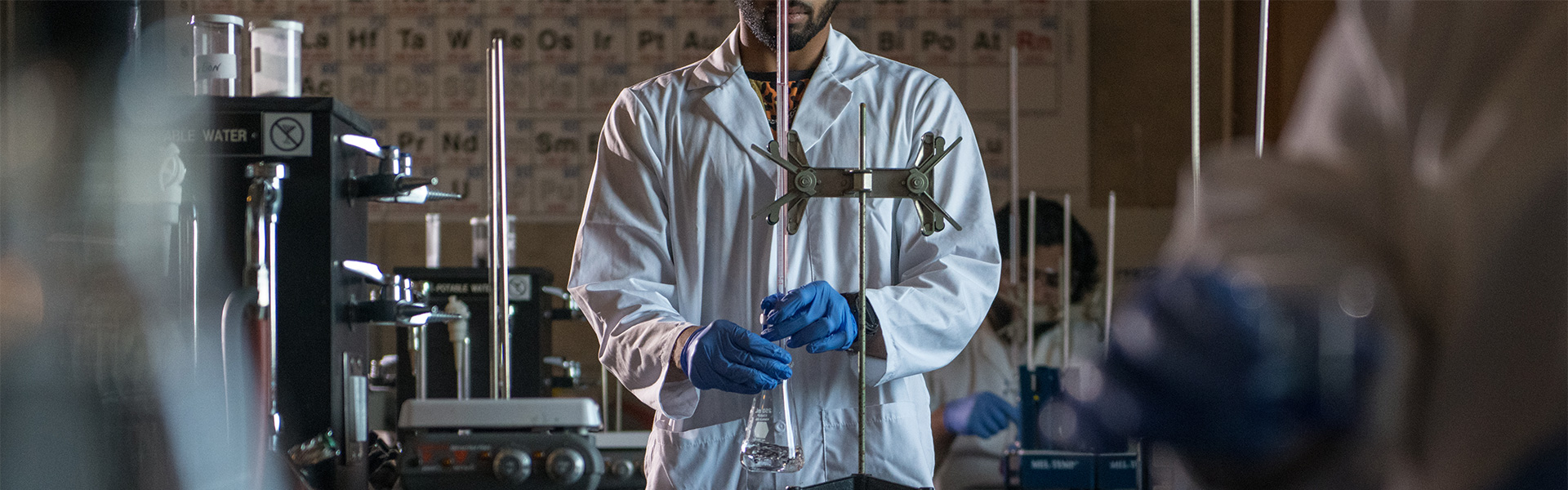
Medical Laboratory Science - Bridge
Overview
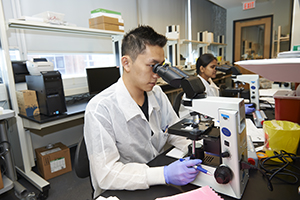 Medical laboratory technologists are in high demand due to the health-care system becoming increasingly dependent on sophisticated laboratory technologies to diagnose, monitor and treat disease.
Modern health care has become increasingly dependent on complex laboratory tests, the results of which aid in the diagnosis, monitoring and treatment of disease. You will gain fundamental knowledge and skills in biological, physical and health sciences. The medical laboratory science-specific courses cover five laboratory disciplines: biochemistry, hematology, histotechnology, microbiology and transfusion science.
This program is accredited by EqualTM Canada, and upon successful completion, you will be eligible to write the Canadian Society for Medical Laboratory Science “General MLT” certification examination. To practice as an MLT in Ontario (and other regulated Canadian jurisdictions), graduates of the program must, in addition to completion of the CSMLS certification exam, meet the standards set by the College of Medical Laboratory Technologists of Ontario, including obtaining a criminal record and judicial matters or vulnerable sector check. Please see the following websites for additional information regarding the requirements for practicing as an MLT in Canada: www.csmls.org; www.cmlto.com.
I chose Ontario Tech specifically for the Medical Laboratory Science program, one of only two Bachelor-level med lab tech programs in Canada. I was drawn to the hands-on experience and access to state-of-the-art research facilities. You work with real patient samples during simulated clinical practicums and learn from professors with extensive professional experience in the field.
Rumesha Khan Bachelor of Health Science (Honours) Class of 2024
Admissions
Admissions
An Ontario College Advanced Diploma* in Biotechnology – Advanced with a minimum mid-70s average.
Applicants must also present completion of acceptable course(s) in Human Anatomy and Physiology at the college or university level. This additional course requirement can be fulfilled either during the diploma program or through additional coursework completed outside of the diploma.
Below is a list of pre-approved courses that will be accepted for admissions consideration. If you have completed, or plan to complete, similar courses elsewhere and wish to know if they are acceptable, you may contact the Admissions team and provide a detailed syllabus for review.
Durham College
- ANAT 1500 Anatomy and Physiology
or
- BIO 1581 Anatomy and Physiology I; and
- BIO 2582 Anatomy and Physiology II
or
- BIO 1502 Anatomy and Physiology I; and
- BIO 2502 Anatomy and Physiology II
Fleming College
- NRSG 163 Anatomy and Physiology I; and
- NRSG 167 Anatomy and Physiology II
Mohawk College
- HSCI 10027 Anatomy and Physiology
Michener Institute
- APCE890 Anatomy and Physiology
- AP807 Gross Anatomy and Physiology
Trent University
- BIOL 1050H Human Anatomy; and
- BIOL 1051H Human Physiology
Note: Admission is competitive. Regardless of educational background, all applicants to undergraduate programs must have specific prerequisite subject knowledge for their intended program of study. The specific average or standing required for admission will vary from year to year. Students are selected by taking into consideration a wide range of criteria, including school marks, distribution of subjects taken and performance in subjects relevant to the academic program. Preference will be given to applicants with the best qualifications.
*must be completed at a public Ontario college established under the Ontario Colleges of Applied Arts and Technology Act, 2002
| Last year's cut-off | 80 per cent |
|---|---|
| Expected cut-off | Low-80s |
The application process and important dates/deadlines are outlined on our college-to-university transfer applicant page.
Career opportunities
- Administrative and/or policy development
- Biotechnology and Pharmaceutical Researcher
- Commercial laboratories producing reagents, vaccines
- Computer and information systems companies
- Reagent, Instrument and Pharmaceutical Sales Representative
- Registered Medical Laboratory Technologist (MLT)
Experiential learning
Students will have the opportunity to apply their knowledge and get hands-on experience in the simulation laboratories. As theoretical knowledge expands, so does experiential knowledge. In fourth year, students will be placed in a diagnostic medical laboratory for the final two practicum semesters where they will work under the supervision of a medical laboratory technologist and perform increasingly complex procedures on human specimens. Clinical placements give students hands-on practice, experience in different work environments and the opportunity to network with potential employers.
NOTE: In the final year of study, after completing all didactic program courses, students must complete a 25-week-long clinical placement at an approved training site. Clinical placement may occur across the province, and students are not guaranteed to receive a placement at their preferred clinical site. Students are responsible for all costs of attending clinical placement, including transportation and finding a suitable residence.
Did you know?
-
Sample courses
- Loading...
- Loading...
- Loading...
- Loading...
- Loading...
- Loading...
- Loading...
- Loading...
- Loading...
- Loading...
- Loading...
- Loading...
- Loading...
- Loading...
- Loading...
- Loading...
- Loading...
- Loading...
- Loading...
- Loading...
- Loading...
- Loading...
- Loading...
- Loading...
- Loading...
- Loading...
- Loading...
For program requirements, including required number of credits for completion, program maps and course descriptions, please see the academic calendar and course catalogue of Loading.... Courses are subject to change without notice. -
Med Lab tour